
Formula 1 has always had failures. Bad cars. Wrong engines. Teams that simply were not good enough.
And then there are failures so rushed, so ill-judged, that they barely qualify as a season at all. The MasterCard Lola Formula 1 team of 1997 sits firmly in that category.
This was not a slow decline or a plucky underdog falling short. It was a full works team with a famous name, a global sponsor, experienced staff and professional drivers, collapsing almost instantly under the weight of its own ambition.
One race weekend. No starts. And a legacy that still gets spoken about in hushed, incredulous tones nearly three decades later.
A famous name with unfinished business
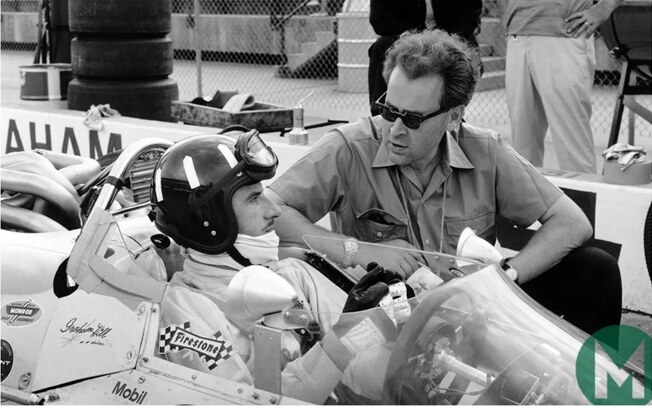
Lola was not a Formula 1 novelty act. By the mid-1990s, Lola Cars had decades of pedigree behind it. Founded by Eric Broadley, the company had produced winning chassis across sports cars, Formula 3000, Formula Ford, IndyCar and endurance racing. Its cars had carried serious drivers and won serious races. In junior categories, Lola was synonymous with credibility.
The company had flirted with Formula 1 before, supplying chassis in earlier eras and attempting a works entry in the 1960s. By the early 1990s, Broadley wanted a proper return—not as a supplier or junior partner, but as a full Lola works team designed, built and run in-house.
The original plan was bold but rational: enter in 1998, allowing time to design a modern chassis, develop a V10 engine and test properly. That changed when MasterCard entered the picture.
The sponsor who wanted everything immediately
MasterCard did not want to be a passive sponsor. It wanted a platform. The project was built around the ‘MasterCard F1 Club’, a membership-style scheme intended to sell exclusivity and access to cardholders. The funding relied on momentum, uptake and visibility rather than conventional sponsorship money sitting safely in reserve.
That commercial pressure accelerated everything. Rather than wait until 1998, the decision was taken to enter in 1997. Being on the grid mattered more than being ready. Those involved would later acknowledge that the timeline was driven as much by marketing ambition as engineering reality.
The model assumed early traction in a sport where traction is normally earned slowly, expensively and painfully. Once the entry date was pulled forward, the margin for error disappeared. From that moment, the failure was baked in. It simply had not surfaced yet.
A car built against the clock
The Lola T97/30 was not a finished Formula 1 car. It was a compromise.
The planned Lola V10 engine was not ready, forcing the team to fall back on an old Ford-Cosworth V8 already underpowered compared with its rivals. Aerodynamic development was limited. Wind-tunnel time was scarce. Proper testing barely happened.
Team manager Ray Boulter later described the project as trying to assemble a proper works Formula 1 operation on a timescale that did not belong in modern F1. Everything was being done at speed and the team felt permanently behind the curve. The paddock sensed it too.
Mechanics were still completing the cars as the Australian Grand Prix approached. The T97/30 had barely been shaken down when it was loaded onto a plane. This was not innovation under pressure. It was optimism substituting for preparation.
The drivers
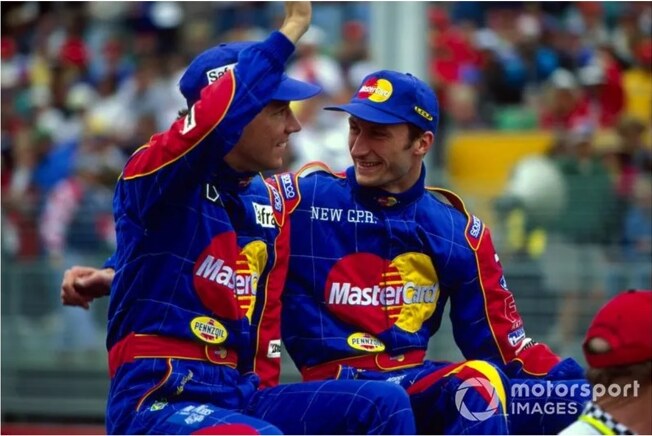
For all the talk about the project being undercooked, the people put in the car were not chancers.
Vincenzo Sospiri arrived with genuine pedigree. He was the 1995 International Formula 3000 champion, had tested for Benetton in the mid-1990s and was widely seen as someone who had done enough to earn a proper Formula 1 opportunity.
Alongside him was Brazilian Ricardo Rosset, a more controversial choice but not an inexperienced one. Rosset had already raced in Formula 1 with Footwork Arrows in 1996. Lola also leaned on testing drivers during the rushed build-up. Allan McNish, already well regarded for technical feedback, was involved in prototype testing in 1995 and 1996.
None of the drivers has tried to spin the story in their favour. There is no grand conspiracy theory—just a shared acknowledgement that they were dropped into something that was not ready to exist.
Melbourne: reality arrives immediately
The 1997 Australian Grand Prix was meant to be a debut. It became a reckoning.
From the first practice laps, the scale of the problem was obvious. The Lola was not merely slow; it was fundamentally wrong. Contemporary reporting and later technical analysis pointed to excessive drag, insufficient downforce and tyre-temperature problems that prevented the car operating in its working window.
Sospiri and Rosset were miles outside the 107% qualifying rule. Rosset, in last place, was 12.717 seconds slower than Jacques Villeneuve’s pole time in the Williams-Renault. He was also 6.114 seconds behind Pedro Diniz in 22nd and 1.114 seconds behind teammate Sospiri in 23rd.
Rosset later called the situation sheer insanity—not simply because Formula 1 is difficult, but because the team arrived knowing the car had not been developed enough to survive at that level. Sospiri echoed the same point. From inside the cockpit, it never felt like a finished project.
Neither driver qualified. The team never took the start. David Coulthard won the race for McLaren-Mercedes.
From embarrassment to withdrawal
Melbourne was not followed by a recovery programme. The commercial model unravelled immediately and the team withdrew before the next Grand Prix. Lola’s Formula 1 return had lasted a single race weekend without making the grid.
Sospiri told The Race in 2021: ‘Like many drivers, my dream was to become a Formula 1 driver. We did everything we could with the budget we had, and we never had enough money to be fair.’
The project failed because commercial urgency overruled engineering reality; visibility was prioritised over readiness; reputation was mistaken for preparation; and nobody pulled the plug while there was still time to retreat with dignity.
Formula 1 does not tolerate shortcuts. There is no grace period. No bedding-in season. Lola did not fail slowly. It failed on arrival.
The Unfiltered Stand verdict
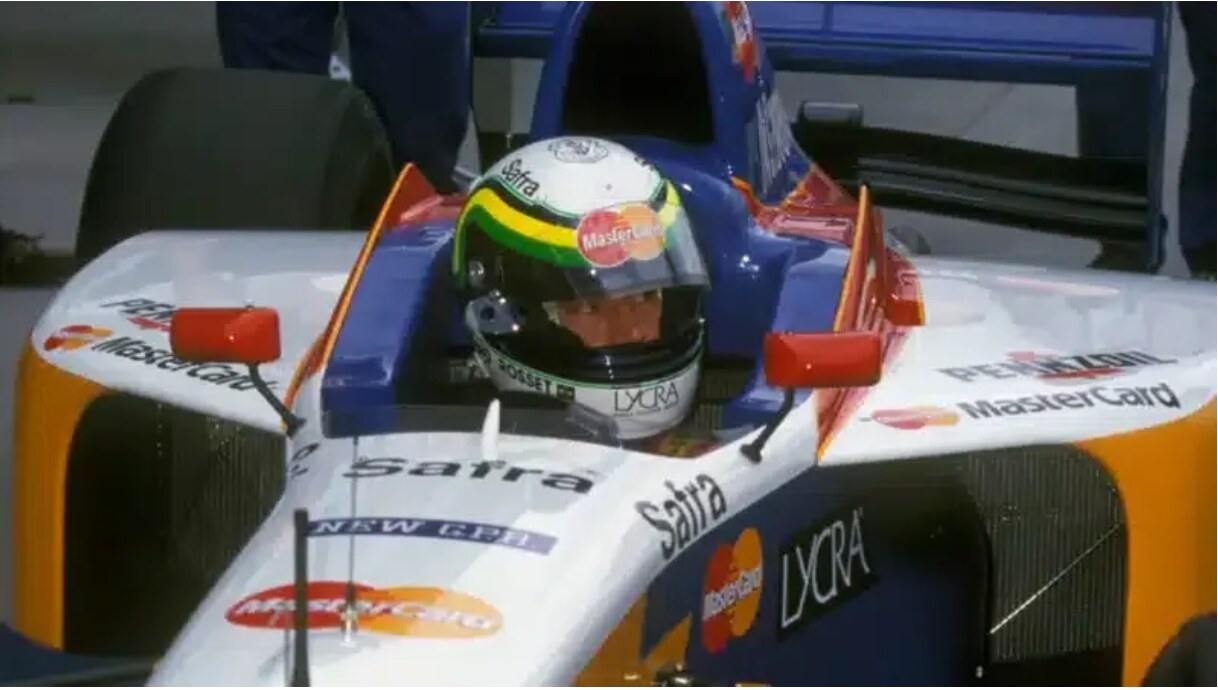
The MasterCard Lola F1 team did not collapse because it lacked talent or effort. It collapsed because ambition arrived before infrastructure, and marketing arrived before machinery.
Those involved do not speak about it with bitterness. They speak about it with disbelief—about how quickly it unravelled and how little room there was to recover once the wheels were in motion.
One weekend. No race starts. No future.
Some failures fade quietly. This one still echoes every time a new team promises more than it can possibly deliver.
And Formula 1 never forgets.